Hot Line vs Cold Line Slab Leaks
A hot line leak warms the floor above it and often shows up fast, while a cold line leak leaves no warm spot and can hide longer. Both waste water around the clock, and both need detection to pinpoint. The line type shapes the signs you see and how the technician tracks the leak.
What is the difference between a hot line and a cold line?
Your home has two sets of water lines under the slab: hot lines that carry heated water from the water heater to taps, and cold lines that carry unheated water from the main supply to every fixture. Both run under or through the concrete slab in many Arizona homes, and either one can leak.
A hot line leak releases heated water into the concrete and soil. A cold line leak releases unheated water. That temperature difference is what makes the two leaks look and feel different from inside the home, even though both are leaks in the same kind of pipe.
Knowing which line is leaking matters. It narrows the search, it shapes the signs you watch for, and it tells the technician where to start. Detection confirms the line, but your notes on what you felt and saw can point the way.
What does a hot line leak feel like?
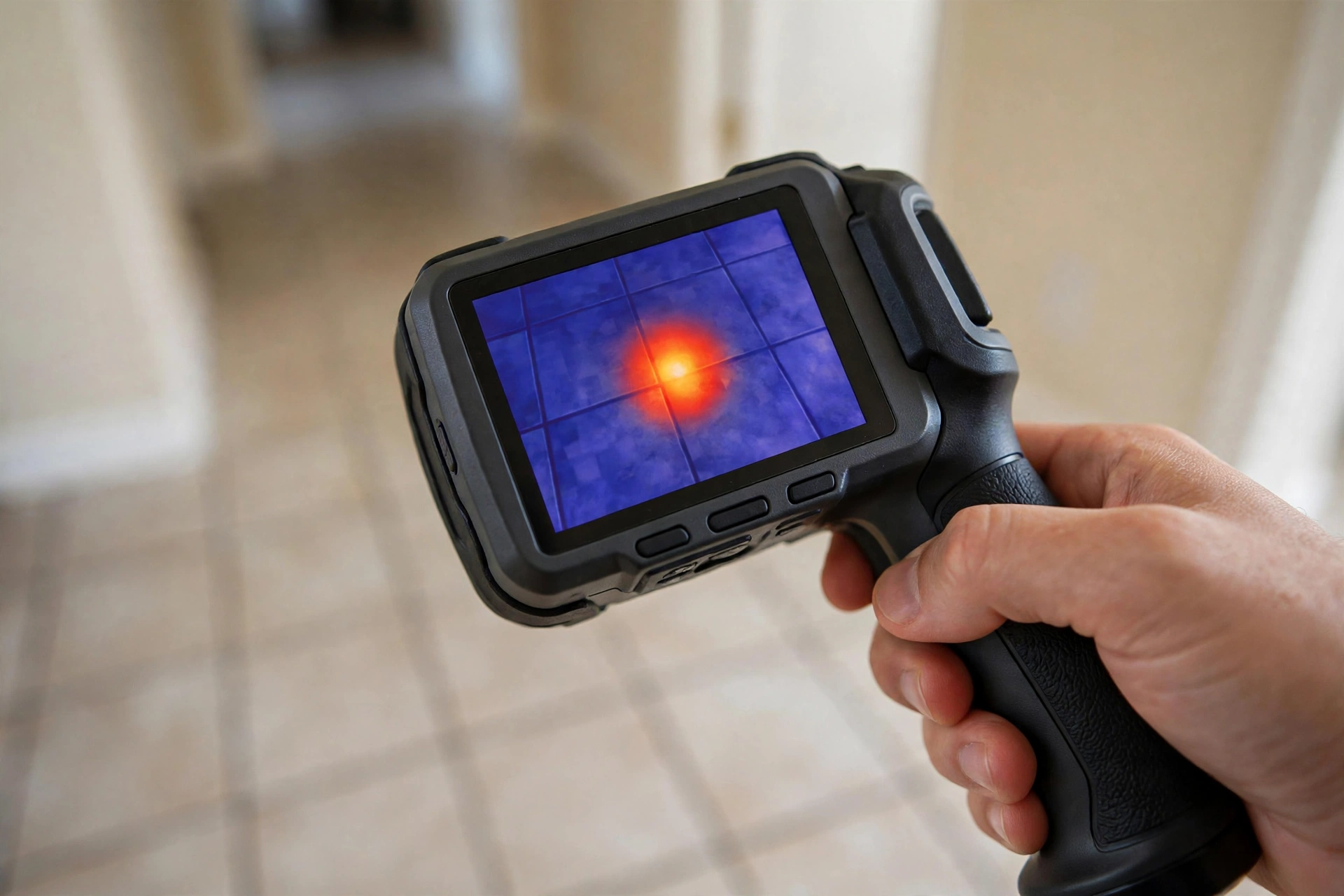
A hot line leak often announces itself with warmth. One patch of floor feels warm to bare feet while the floor around it feels cool. The warm patch may sit in a hallway, kitchen, bathroom, or laundry room, along the path of a hot line. It stays warm even when the air conditioner has been running and the sun is not on that floor.
Hot line leaks also show up in hot water behavior. The water at a tap may take longer to run hot, or it may never get as hot as it used to, because heated water is escaping before it reaches the tap. The water heater may run more often than usual as it works to replace the heated water that is leaking away.
Thermal imaging picks up a hot line leak clearly, because the camera reads the warm plume spreading from the leak point. The warm patch on the camera often lines up with the loudest sound from acoustic listening, which gives the technician a solid location.
What does a cold line leak feel like?
A cold line leak gives you no warm spot. The floor above it feels normal to the touch, and the water at your taps feels normal too. That makes cold line leaks easier to miss and slower to catch.
The signs that do appear are the quiet ones: a water bill that jumps with no change in use, a meter that moves with all taps off, damp grout or a damp spot along a baseboard, and the sound of running water when nothing is on. Each sign alone is easy to brush off, so watch for two or more together.
Thermal imaging helps less on a cold line, because the temperature contrast is weaker. Acoustic listening carries more of the work, because the sound of escaping water is still clear. The technician may also isolate lines by pressure testing to confirm which cold run holds the leak.
How does detection differ between the two?
Detection starts the same way for both: the meter test confirms a leak, and a walkthrough narrows the search area. From there, the tools shift with the line type.
On a suspected hot line leak, thermal imaging often leads. The camera maps the warm plume, and acoustic listening confirms the loudest point. When both land in the same spot, the location is solid.
On a suspected cold line leak, acoustic listening often leads. The technician listens along the cold runs, then uses pressure testing to isolate one run at a time. A run that loses pressure holds the leak. A run that holds is clear. Line tracing maps the path of the cold run so the search stays on the right line.
Do the fixes differ for hot and cold lines?
The repair options are the same for both: a spot repair fixes one leak at one point, and a reroute runs a new line overhead and leaves the old line in place. What changes is which option fits, and how the new line is routed.
Hot lines face more expansion and contraction as they heat and cool, so the joints and bends on a hot run take more stress. When a hot line has leaked once, the technician looks closely at the rest of the run for the same wear. A hot run with wear along its length may suit a reroute.
Cold lines face less heat stress, but they still wear from hard water, soil movement, and pressure. A cold line with a single leak and a sound run often suits a spot repair. Either way, the condition of the whole run, not only the leak point, shapes the choice. Read the full comparison on spot repair vs repiping.
What should I note before I call?
Note whether any floor patch feels warm, and where. Note whether hot water at any tap takes longer to run hot, or never gets as hot as it used to. Note the water bill change, the meter test result, and any damp spots or sounds. Each detail helps the technician tell a hot line leak from a cold line leak before the tools come out.
Note the rooms too. Hot lines run to bathrooms, kitchens, and laundry rooms. Cold lines run to every fixture, including toilets and hose bibbs. If the signs cluster near a bathroom, the hot line to that room is a likely suspect. If they cluster near a hose bibb or a toilet, a cold line may be the source.
Take photos of damp spots and meter readings with dates. Photos keep the record clear and help you describe the problem without guessing. Read the 7 signs you have a slab leak guide to check the other signs before you call.
Frequently Asked Questions
A hot line leak often warms the floor above it and changes how fast hot water reaches a tap. A cold line leak leaves no warm spot, so it shows up through a jumping bill, a moving meter, dampness, or the sound of running water.
Both waste water around the clock and both need prompt attention. A hot line leak also keeps your water heater working harder, so it can show up in energy use as well as water use.
Yes. Thermal imaging, acoustic listening, and pressure testing together show which line holds the leak. Isolating one run at a time confirms the source.
No. A cold line leak releases unheated water, so the floor above it feels normal. A warm floor points toward a hot line leak.
The repair options are the same: spot repair or reroute. The choice depends on the condition of the whole run, the history of leaks, and where the leak sits, not only on whether the line is hot or cold.
Last updated: October 16, 2026.