How Slab Leak Detection Works
Slab leak detection pinpoints a leak under your concrete floor before any concrete comes up. A technician starts with the meter test, then uses acoustic listening to hear the leak, thermal imaging to see heat patterns, and line tracing to map the run, so the repair can stay focused on one spot.
What happens first when a technician arrives?
A detection visit starts with a conversation, not a jackhammer. The technician asks what you noticed, when it started, and where. Warm spots, damp areas, sounds, and bill changes all help narrow the search. Photos of damp spots and meter readings help too, so keep them handy.
Next comes a walkthrough. The technician checks the rooms you flagged, looks at baseboards and grout, and feels for warm or damp areas. The walkthrough turns your notes into a search area, often one room or one run of pipe rather than the whole home.
This first step matters more than it looks. A leak under a hallway and a leak under a bathroom can sound alike to a homeowner, but they point to different lines. A careful walkthrough keeps the rest of the visit focused.
How does the meter test confirm a leak?
The meter test confirms that water is going somewhere it should not. The technician turns off every tap and water-using appliance, then watches the water meter. If the meter keeps moving with everything off, the system has a leak.
A second check isolates the home from the yard. With the main shutoff closed, the meter should stop. If it stops, the leak sits inside the home. If it keeps moving, the leak may sit in the service line between the meter and the home. That split tells the technician where to search.
The meter test takes only a short while, and it gives a clear yes or no. It does not say where the leak sits, only that one exists. The listening and imaging steps that follow answer the where question.
How does acoustic listening find a leak?
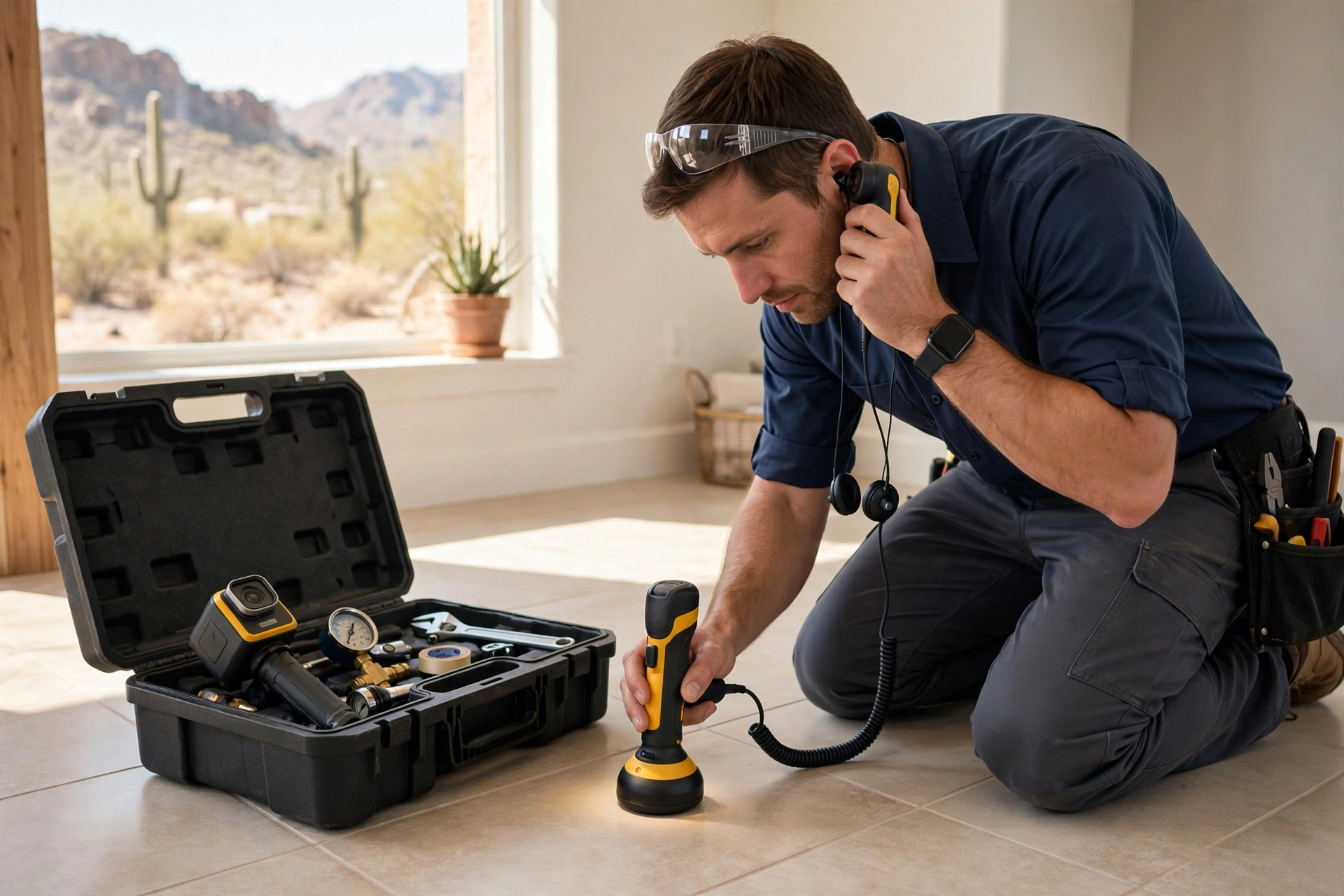
Acoustic listening uses sensitive ground microphones and headphones to hear water escaping from a line. A leak makes a distinct hiss or whoosh as pressurized water pushes through a small opening. The sound is often too faint to hear with the naked ear through concrete and flooring, but the equipment picks it up.
The technician moves the sensor across the floor in a grid, listening for the spot where the sound runs loudest. The loudest point marks the leak. In a quiet home, the sound stands out clearly. In a noisy home, the technician may ask for quiet appliances and fans during the listening pass.
Acoustic listening works well on both hot and cold lines, and it works through tile, wood, and carpet. It is non-invasive, which means no floor comes up during detection. The floor stays intact until the repair plan is set and you have agreed to it.
How does thermal imaging help?
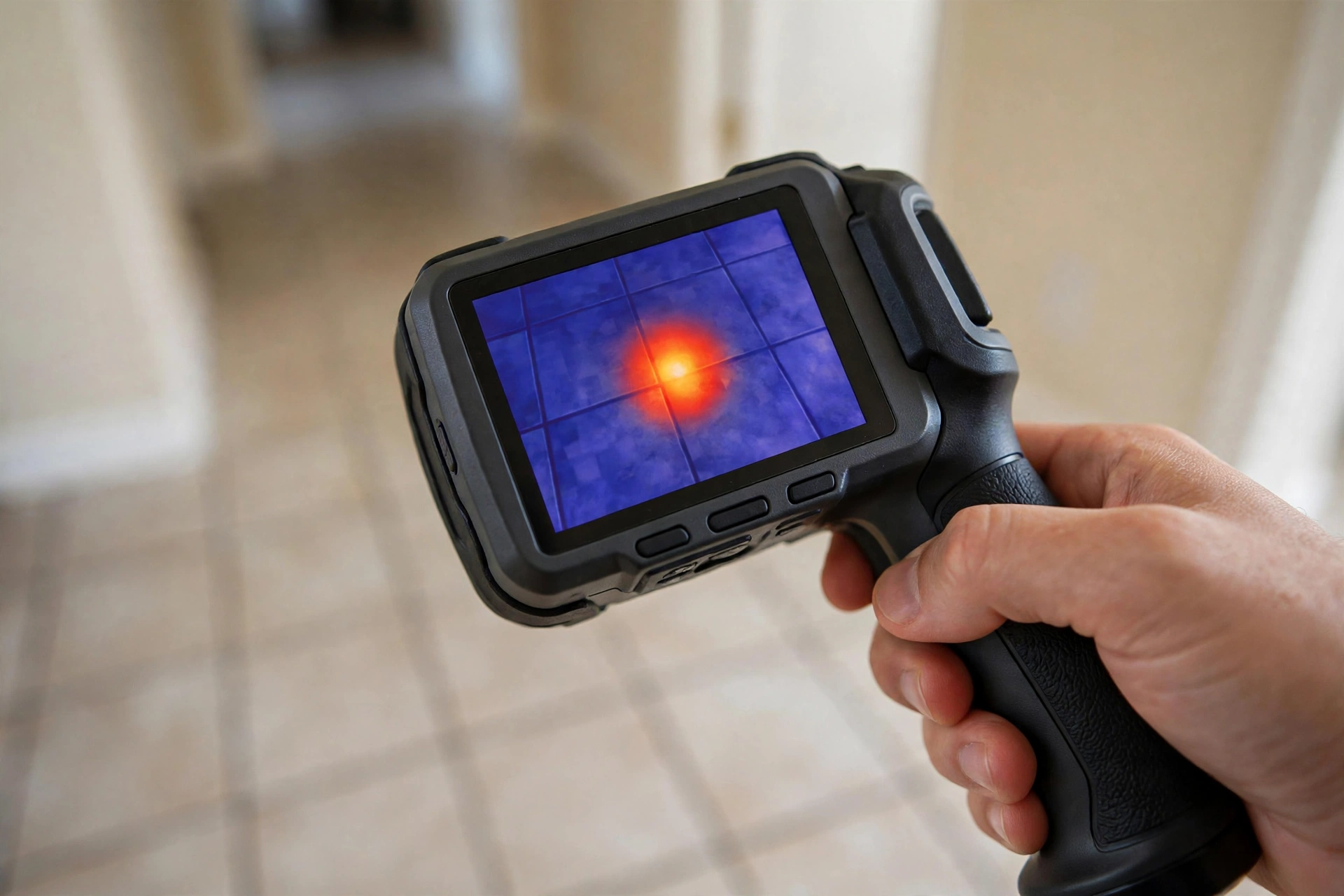
A thermal camera reads surface temperatures and shows them as a color map. On a hot water line leak, the camera shows a warm plume spreading from the leak point across the floor. The shape of that plume often points straight at the source.
Thermal imaging helps most on hot lines, where the temperature contrast is strong. On cold lines, the camera may show a cool patch, though the contrast runs weaker. The technician reads the image with the acoustic results, not on its own, because sun on a floor or a heating vent can also warm a patch.
Used together, acoustic and thermal results cross-check each other. When the loudest sound and the warmest patch land in the same spot, the location is solid. When they disagree, the technician runs more passes before calling the location.
What else can a technician use to pin down a leak?
Line tracing maps the path of a water line under the slab. A small signal goes onto the line, and a receiver above the floor follows it. The trace shows where the line runs, where it turns, and where it meets fixtures. That map keeps the search on the right line.
Pressure testing can isolate one line at a time. The technician closes off one run, watches the pressure, and sees if it holds. A run that loses pressure has the leak. A run that holds is clear. This step helps when two lines run close together and the sound alone cannot separate them.
In some homes, the technician may use a small inspection camera through an access point to look inside a line. Not every home needs it, and it does not suit every line. The technician picks the tools that fit your home and your leak, rather than running every tool on every visit.
What should I expect during the visit?
A detection visit is quiet work. Expect the technician to move through the flagged rooms with sensors and a camera, to turn taps on and off, and to check the meter more than once. You can stay in the home and ask questions as the work goes on.
You do not need to move furniture ahead of time, though clearing a path to the flagged areas helps. Keep pets in another room during listening passes, because barking and footsteps add noise. If you have floor plans, prior repair records, or notes on where lines run, share them.
At the end of the visit, the technician shows you the findings: where the leak sits, which line it is on, and what the repair options look like. You get a written findings report you can keep. That report also helps if you need to talk with your insurer, because it records what was found and where.
What happens after the leak is found?
Once the location is known, the fix depends on the line, the leak, and the shape of the rest of the run. A single leak in a sound line may suit a spot repair, which opens one small area of floor and fixes the leak at that point. A line that shows wear along its run may suit a reroute, which runs a new line overhead and leaves the old line in place.
Read our comparison on spot repair vs repiping to see how the two fixes differ, and read the 7 signs you have a slab leak guide if you are still sorting out whether you have a leak at all.
Frequently Asked Questions
No. Acoustic listening, thermal imaging, and line tracing are non-invasive. No concrete comes up during detection. The floor stays intact until a repair plan is set and you have agreed to it.
Most visits take a few hours, depending on the size of the home and how clear the signals are. Homes with more than one line run or with faint signals can take longer.
Yes. Acoustic sensors and thermal cameras work through tile, wood, and carpet. Tile can hide a leak from sight, but it does not block the sound or the heat pattern.
Detection sorts that out. The meter test and line isolation show whether the leak sits under the slab, in a wall line, in the yard service line, or in a fixture. The fix follows the true location.
Yes. You get a written findings report that records where the leak sits, which line it is on, and what repair options fit. Keep it with your home records.
Last updated: October 16, 2026.