Hard Water and Slab Leaks in Arizona
Arizona water carries a lot of dissolved minerals, and those minerals leave scale inside pipes over many years. Scale narrows the pipe, roughens the inner wall, and can speed up the wear that leads to pinhole leaks in copper lines under a slab. You cannot see that wear from above, so meter checks and early signs matter more here.
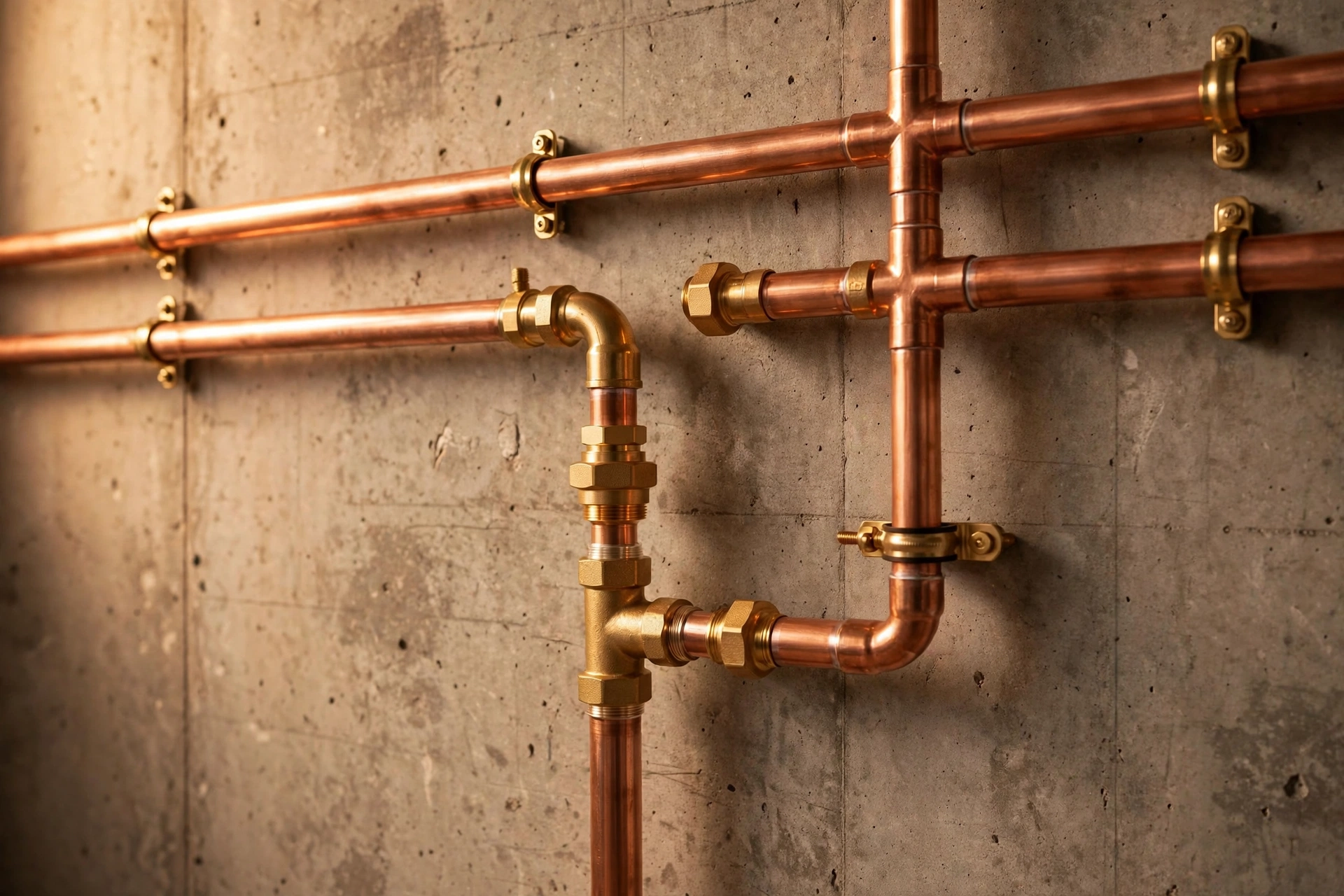
If you live in Arizona, you already know hard water by its fingerprints: white crust on faucets, spots on dishes, soap that never quite lathers. Those are the visible signs. The hidden ones form inside your pipes, where mineral scale builds up year after year on the inner walls.
That buildup matters most where you cannot see it. Water lines buried under a concrete slab carry the same mineral-heavy water as the rest of the home. Over time, that wear can open pinhole leaks in copper lines.
What is hard water, and why is Arizona water so mineral-heavy?
Hard water is water that carries a high load of dissolved minerals, mainly calcium and magnesium. As water moves through desert soil and rock, it picks up those minerals and carries them into wells and municipal supplies. Arizona draws much of its water from sources that run through mineral-rich ground, so hard water is common across the state, from Phoenix and Mesa to Tucson and the smaller desert towns.
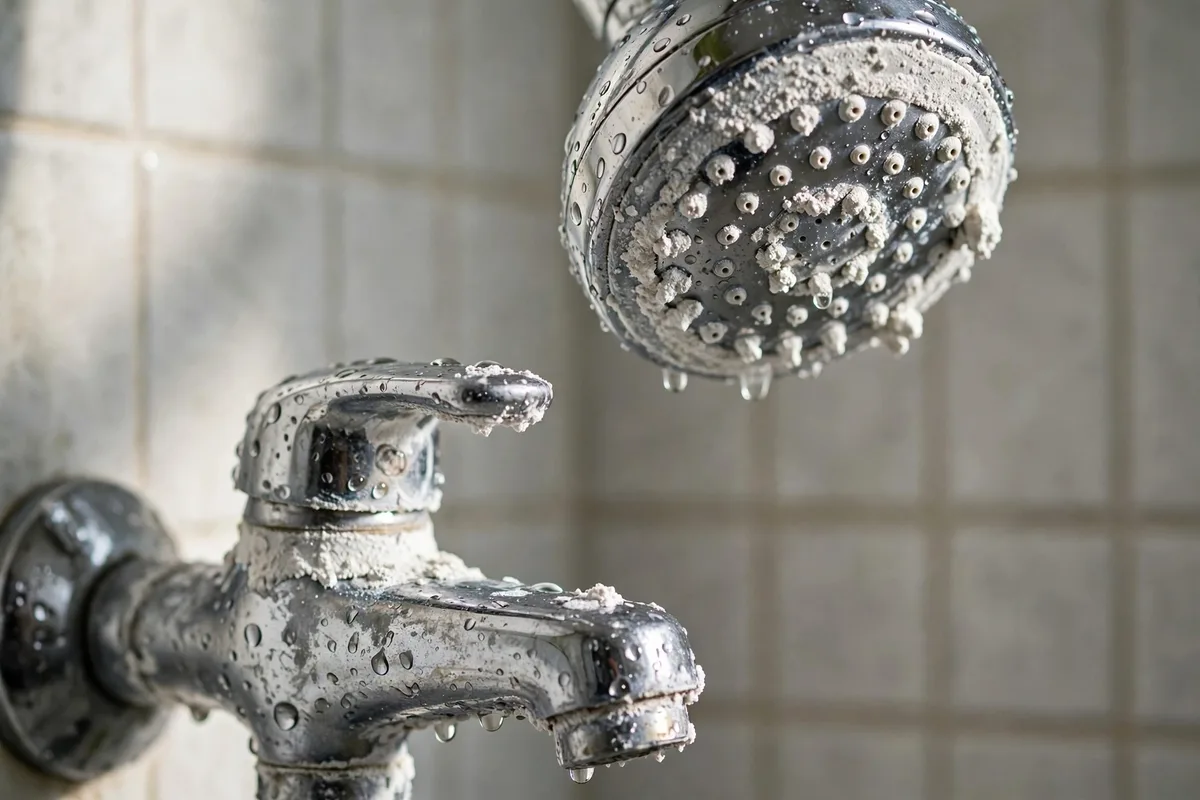
You can spot hard water without any test. White crust gathers around faucet openings and showerheads. Dishes come out of the wash with spots. Soap forms a film instead of a rich lather. Laundry can come out stiff, and a kettle builds up scale inside. Each of those signs means the same minerals are also moving through your pipes.
The mineral load varies by area and by water source. Your water provider can tell you about the water that serves your street. What stays constant is the direction of the effect: more minerals in the water means more scale inside the pipe.
How does mineral buildup wear down copper pipes?
Scale starts as a thin film on the inner wall of a pipe. With hard water running through the line day after day, that film thickens into a crust. The crust narrows the opening, so water pushes through a smaller channel.
The crust also roughens the inner wall. Smooth copper resists wear, but a rough, scaled surface gives moving water more to bite on. Tiny pits form under and around the scale. In copper lines, those pits can deepen into pinhole leaks: small holes that spray a fine jet of water into the soil or concrete around the pipe.
Hot water lines tend to show this wear first. Heat speeds up scale buildup, so the hot line often scales faster than the cold line beside it. That is one reason a warm spot on the floor is such a telling sign.
None of this happens fast. Scale builds over many years, and a pinhole leak is the end of a long, quiet process. Nothing looks wrong until the day a floor spot turns warm or a baseboard swells.
Why do slab lines suffer more than visible pipes?
A pipe under a slab faces the same hard water as a pipe in a wall, but it faces it with no air, no light, and no chance for a quick look. A small leak in a wall pipe shows up fast as a stain on drywall. A small leak under a slab soaks into soil and concrete first, and the signs can take a while to reach the surface.
Soil adds its own stress. Arizona clay soil swells when wet and shrinks as it dries, and a slab line rides through that movement while buried. A scaled, thinned pipe wall handles that stress worse than a sound wall.
Slab lines also run long paths with few joints a homeowner can inspect. The only clues are the ones that reach the surface: warmth, damp, sound, and the meter.
What signs point to hard-water pipe wear?
Hard water wear itself stays hidden, but its effects do not. Watch for this mix of household clues and slab leak signs:
- White crust on faucets, showerheads, and around pipe joints you can see.
- Falling water pressure at one tap, or across the whole home, with no clear cause.
- Warm spots on tile or concrete floors, often near bathrooms or the kitchen.
- Damp baseboards, or a patch of floor that never quite dries.
- A faint hissing or running-water sound when every tap is off.
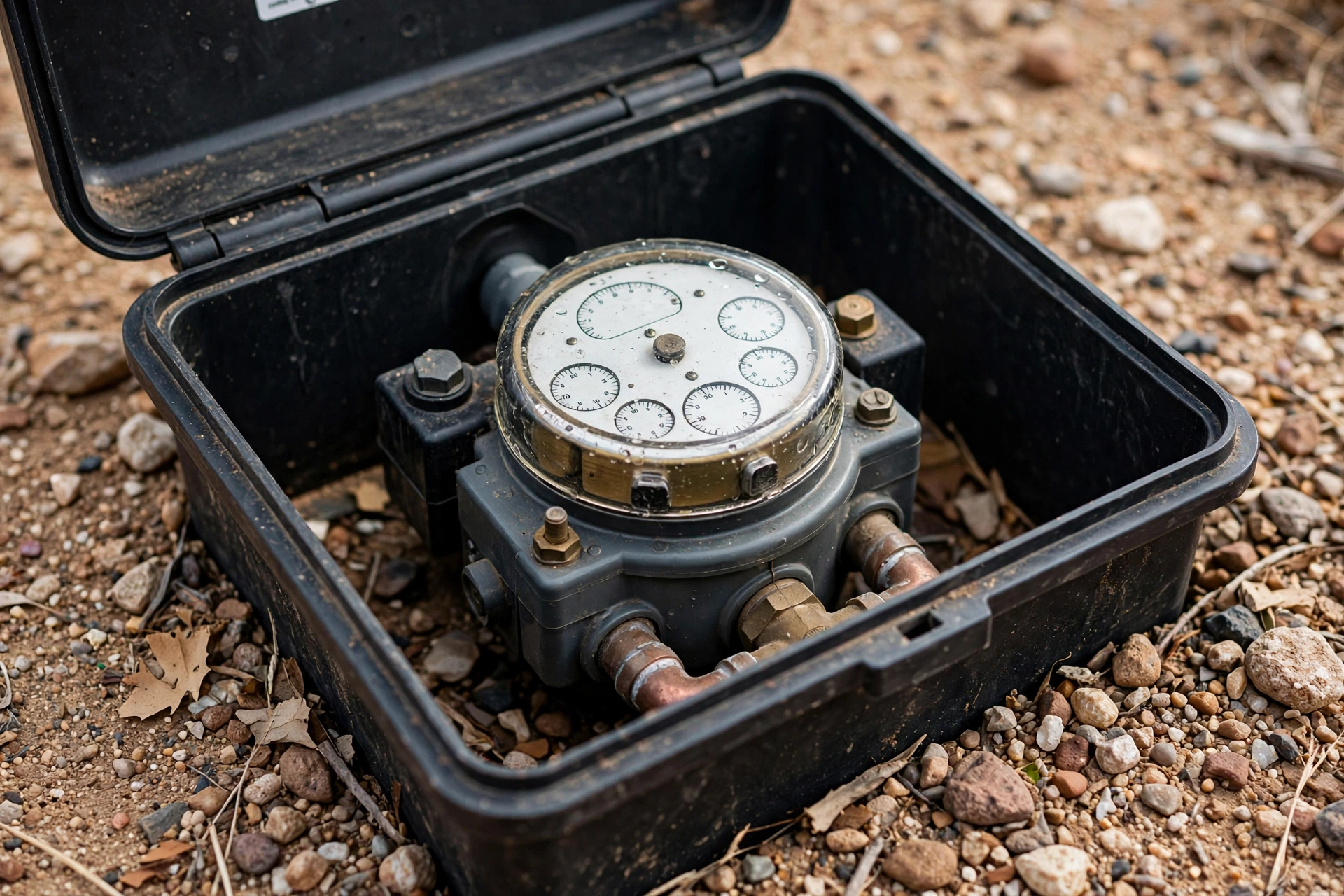
- A water meter that moves while nothing in the home runs.
- Cloudy or spotty dishes and stiff laundry that keep getting worse.
The first two clues say your water is hard and your pipes are scaling. The middle four say a leak may already be open. When household hard water signs show up together with slab leak signs, treat the leak signs as the priority and get detection set up.
What can homeowners do to slow the damage?
You cannot change the water that reaches your street, but you can lower the mineral load inside the home. A water softener treats water as it enters the home, which slows new scale buildup in every line, including the ones under the slab. A softener does not repair wear that already exists, and it does not close a leak that has already opened, but it slows the process that wears pipes down.
Simple habits help too. Clean aerators and showerheads when crust builds up, so flow stays even. Fix dripping taps and running toilets, and check the meter once in a while, so a slow leak does not run unnoticed.
For homes with older copper lines, a periodic leak check is worth the habit. Detection can find a small leak before it soaks a wide area. When lines keep leaking, a reroute can move water lines out from under the slab, where future wear is easier to spot and fix.
Frequently Asked Questions
Hard water does not punch a hole in a pipe by itself. It leaves mineral scale that narrows the pipe and roughens the inner wall, and that wear over many years can lead to pinhole leaks in copper lines.
Common clues include white crust on faucets and showerheads, spots on dishes after they dry, soap that does not lather well, and stiff laundry. Your water provider can also tell you about the water that serves your area.
A softener lowers the mineral load in the water, which can slow new scale buildup inside pipes. It does not repair wear that already exists, and it does not fix a line that already leaks.
Pinhole leaks in copper lines often trace back to long-term wear inside the pipe, and hard water scale is one common driver of that wear. Age, water chemistry, and soil movement can all play a part, so detection pins down the real source.
Watch for slab leak signs like warm floor spots, damp baseboards, and a meter that moves with everything off. If any of those show up, set up leak detection so the line can be checked before a small leak grows.
Last updated: October 16, 2026.